 Cherish
Cherish
Cherish
The global cargo elevator market is currently experiencing a massive shift, driven by the rapid expansion of multi-story warehousing and the rise of mega-logistics hubs. As leading Cargo Elevator Manufacturers, we observe that industries are moving away from traditional single-story facilities to vertical structures to optimize urban land usage. This transition has placed cargo elevators—specifically heavy-duty freight lifts—at the heart of modern industrial infrastructure. From the bustling ports of Southeast Asia to the high-tech manufacturing corridors of North America and Europe, the demand for reliable vertical transportation has never been higher.
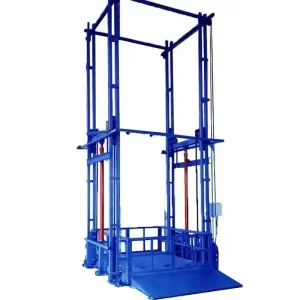
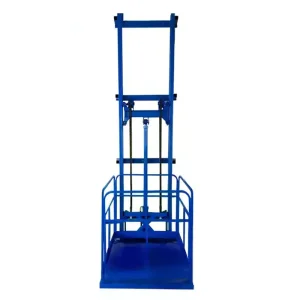
Today's Industrial Cargo Elevators are no longer simple mechanical platforms. They are sophisticated systems engineered to handle payloads ranging from 300kg to over 10 tons. The market is bifurcated into hydraulic and traction-driven systems, each serving specific operational needs. Hydraulic rail-type cargo lifts, for instance, have gained immense popularity in factories and warehouses due to their structural stability, lower maintenance costs, and ease of installation in buildings without existing lift shafts.
Modern factories are demanding "smart" elevators. Our R&D department is focusing on IoT-enabled sensors that provide real-time data on load balance, motor temperature, and cycle counts. This allows for predictive maintenance, reducing unexpected downtime by up to 40%.
Green building certifications (like LEED) are influencing procurement. We are integrating regenerative drives and LED lighting systems into our freight elevators to minimize carbon footprints and lower operational electricity costs for our global clients.
The trend is towards "Machine Room-Less" (MRL) designs. By utilizing compact hydraulic pump stations or slim traction motors, we help factories reclaim valuable floor space that would otherwise be occupied by bulky elevator equipment rooms.
When global enterprises look for Cargo Elevator Factories, China remains the top destination. The reason lies in the unparalleled supply chain efficiency and the ability to offer highly customized solutions at a competitive price point. At Cherish, we don't just sell standard products; we engineer bespoke lifting solutions.
Our elevators are deployed in various environments:
Cherish has always upheld the principle of "quality as the foundation," strictly controlling every step from raw material procurement to production to ensure that product quality meets international leading standards. We have obtained multiple international certifications, including ISO9001 Quality Management System Certification and CE Certification, and our products are exported to many countries and regions worldwide.
We understand that excellent service is the cornerstone of business growth. Cherish has established a comprehensive pre-sales, in-sales, and after-sales service system, providing customers with full technical support and service guarantees. Our experienced service team is available 24/7 to respond to customer needs, ensuring a worry-free experience for our clients.
What sets a premium Cargo Elevator Manufacturer apart from the rest is the attention to structural integrity. A cargo elevator must withstand not just vertical weight, but the lateral forces exerted during loading and unloading by forklifts or pallet jacks.
We use high-grade T-steel rails that ensure smooth travel even when the platform is unevenly loaded. This prevents the "sway" common in cheaper models.
Our hydraulic lifts utilize Italian-imported or top-tier domestic pump stations that provide silent operation and a "soft start/soft stop" feature to protect sensitive cargo.
Redundancy is key. Every lift we manufacture includes mechanical anti-fall locks, emergency descent valves, and overload protection sensors.
For global buyers, the procurement process involves checking the Duty Cycle. A factory operating 24/7 requires a lift with high thermal resistance and heavy-duty contactors. As a factory with over 15 years of data, we customize the electrical and mechanical components to match the specific duty cycle of your operation, ensuring longevity that exceeds 10-15 years with basic maintenance.