 Cherish
Cherish
Cherish
Puzzle Parking Dimensions play a crucial role in urban planning. As cities grow, parking solutions must adapt. Puzzle parking systems are innovative. They save space and increase parking capacity.
These systems allow cars to be stacked efficiently. However, many people are unaware of the standard dimensions required for these setups. Understanding these dimensions is vital for optimal design. Each puzzle parking structure may have unique specifications. This can lead to inconsistencies if not properly addressed.
Common dimensions include height, width, and depth. Miscalculations can result in usability issues. Frustration arises when cars do not fit as expected. Clear understanding is key to successful implementation. As cities evolve, so too should our approaches to parking solutions. Proper knowledge of Puzzle Parking Dimensions ensures a smoother integration into urban environments.
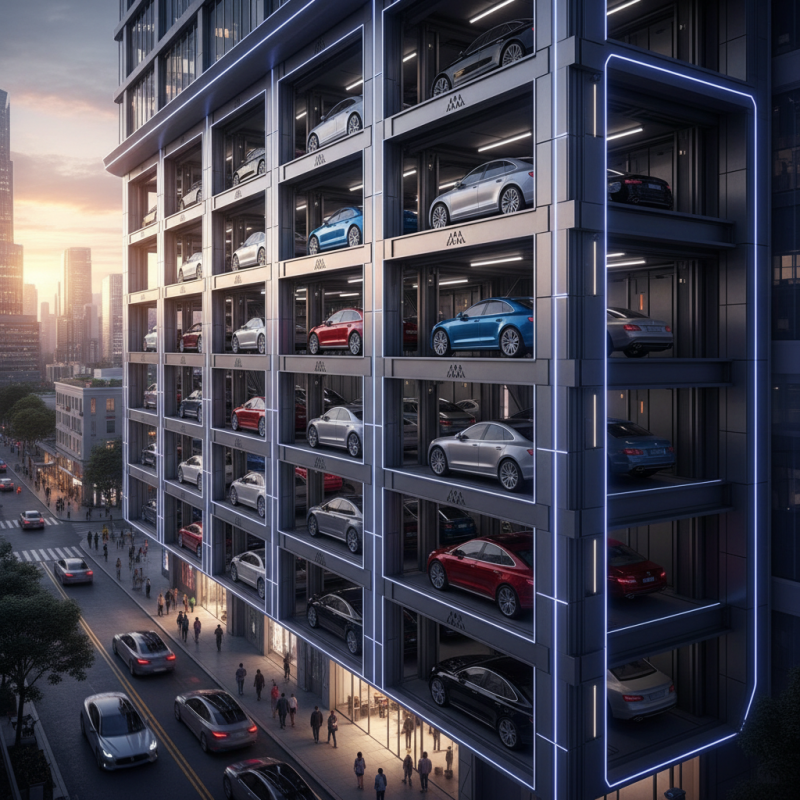
Puzzle parking systems are becoming popular solutions in urban environments. Understanding the standard dimensions for these spaces is crucial for effective design. Generally, a standard puzzle parking space measures around 2.5 meters wide and 5 meters long. This provides enough room for various vehicle sizes. However, not all designs adhere to these exact measurements, leading to inconsistencies.
Some industry reports highlight that while standard dimensions are beneficial, they may not fit every context. For example, some manufacturers recommend widths as narrow as 2.4 meters for compact vehicles. These variations can pose challenges when trying to accommodate larger or more diverse vehicle types. A poorly designed puzzle parking system can create difficulty for users, especially in crowded urban areas.
It's vital to consider the height clearance too. Most systems require at least 2.2 meters of vertical space. This dimension is often overlooked but is key for larger vehicles. Yet, it's common to see systems that do not meet this standard. Such oversights lead to frustrations among users and reduce overall efficiency. Proper planning and adherence to standards play a critical role in maximizing the functionality of puzzle parking spaces.
| Dimension | Measurement | Notes |
|---|---|---|
| Standard Parking Space Width | 2.5 m (8 ft) | Typical width for single space. |
| Standard Parking Space Length | 5.0 m (16.5 ft) | Standard for most vehicle sizes. |
| Total Space Width for Puzzle Configuration | 5.0 m (16.5 ft) | Combined width when two cars are parked. |
| Aisle Width | 3.2 m (10.5 ft) | Space to maneuver between parked vehicles. |
| Height Clearance | 2.1 m (7 ft) | Minimum height for vehicles. |
| Slope for Access Ramps | 1:12 | Recommended slope for accessibility. |
: Usually, a standard puzzle parking space is about 2.5 meters wide and 5 meters long.
Some designs may have widths as narrow as 2.4 meters. This can create challenges for larger vehicles.
Most systems require at least 2.2 meters of vertical space for larger vehicles. Neglecting this can frustrate users.
A 60-degree angle is best for smoother parking maneuvers. Steeper angles may confuse users and complicate parking.
Good lighting reduces accidents and enhances comfort. Poor lighting can create safety hazards and discomfort.
A rigid design may not adapt to future vehicle sizes or needs, like electric vehicle charging stations.
Engaging with users about their experiences can reveal design flaws. Regular feedback allows for ongoing improvements.
Difficult designs can create user frustration, especially in crowded urban areas. Efficient design should be prioritized.
It involves optimizing dimensions, often reducing the average width to about 7 feet while ensuring accessibility.
Designing with adaptability in mind allows for modifications in response to changing vehicle sizes and user needs.
Puzzle parking dimensions are designed to optimize the use of space while accommodating multiple vehicles in a compact layout. These dimensions typically differ from traditional parking spaces, requiring careful consideration in design to ensure functionality and safety. Various types of puzzle parking systems have unique specifications that impact their overall dimensions, making them suitable for different environments.
In addition to the standard dimensions, regulatory standards play a crucial role in determining the acceptable sizes for puzzle parking systems. A comparative analysis with traditional parking dimensions reveals distinct advantages and potential challenges associated with puzzle parking designs. Implementing best practices in layout design can further enhance efficiency, ensuring that users can easily navigate and utilize the available space. Understanding puzzle parking dimensions is essential for urban planners and architects looking to maximize parking solutions in increasingly congested areas.
