
Cherish
The Powder Coating Spray Line industry is poised for significant evolution by 2026. As companies shift towards sustainable practices, demand for innovative solutions rises. According to a recent market report, the powder coating market is projected to grow at a CAGR of over 6% during the next few years. This growth is driven by the increasing need for durable and environmentally-friendly coating options.
In the coming years, we can expect advancements in technology and efficiency within Powder Coating Spray Lines. Automation and smart technology integration are crucial trends. By utilizing these innovations, manufacturers can reduce waste and improve application precision. However, there are challenges to address. Ensuring operators are trained to manage new technologies is vital for a seamless transition.
Moreover, the economic landscape will influence how businesses approach their powder coating strategies. Companies must balance cost and quality as they invest in new spray line technologies. Staying informed about industry shifts and maintaining flexibility will be essential for success. The future of Powder Coating Spray Lines is bright, yet the journey involves continuous adaptation and learning.
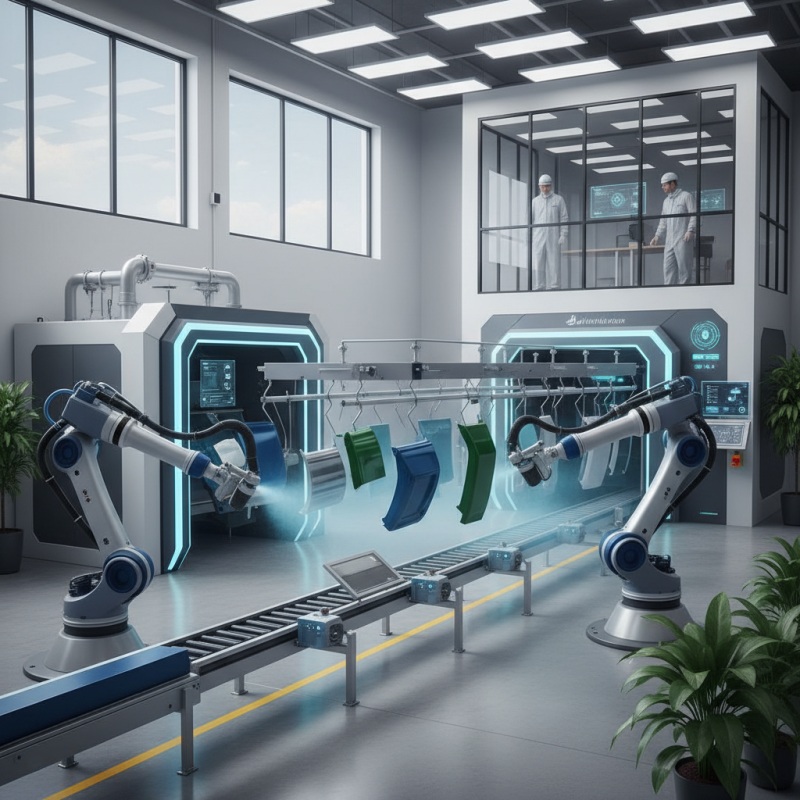
The powder coating industry is witnessing transformative changes that are shaping the future of spray lines. Emerging technologies focus on enhancing efficiency and sustainability. According to a report from Allied Market Research, the global powder coating market is expected to reach $24 billion by 2026, driven by innovative practices. High transfer efficiency systems are now essential, allowing operations to reduce waste while optimizing material use.
Automation plays a critical role in this evolution. Robotics are increasingly integrated into spray lines, enabling faster application without compromising quality. For instance, studies show that automated systems can improve productivity by up to 30 percent. However, these technologies require substantial investment and ongoing training for operators. Adjusting to the new systems can present challenges, especially for smaller manufacturers.
Environmental considerations are also at the forefront. Powder coating is already favored for being eco-friendly, but innovations are pushing boundaries further. Advanced low-temperature curing processes reduce energy consumption. Reports suggest energy savings can exceed 20 percent with these methods. Nevertheless, reliability and consistency in performance must be continually evaluated to meet industry standards, which remains a work in progress.
Sustainability is becoming crucial in powder coating processes. Modern manufacturers are now focusing on eco-friendly materials. High-quality, sustainable powders are being developed. These materials not only reduce waste but also improve efficiency. Recycling unused powder is gaining traction, which minimizes the environmental footprint.
Reducing energy consumption is another prominent trend. Advanced curing techniques can save significant energy. However, companies must balance speed with sustainability. Some businesses still struggle with outdated equipment that increases waste. Maintenance of older systems can be a barrier to greener practices. Hence, investments in technology are essential for large-scale changes.
Water-based powder coatings are emerging as a viable alternative. They offer lower VOC emissions compared to solvent-based options. Yet, they still require extensive testing and adjustment in processes. Adopting these methods may come with challenges. Compliance with stricter regulations also adds pressure on manufacturers. Continued investment in research will be crucial to overcome these hurdles.
The following chart illustrates the anticipated trends in sustainability practices within powder coating processes over the next few years. The data reflects the percentage of companies adopting specific sustainable practices.
The landscape of powder coating is rapidly evolving. Automation and robotics now play a pivotal role in streamlining operations. With advanced machinery, companies can enhance productivity while maintaining precision. Operators oversee automated systems that can efficiently manage complex tasks. This reduces the potential for human error and increases consistency in coating applications.
Investing in robotics provides unique benefits. For instance, robotic arms can handle intricate parts that require a delicate touch. They also enable operations to work around the clock, maximizing output. However, the transition to a fully automated system is not without challenges. It requires significant investment and training. Teams must adapt to new technology and workflows. Workers may feel uncertain about job security as machines take on more tasks.
Moreover, data collection from automated systems provides valuable insights. Analyzing this data can reveal trends and areas for improvement. However, companies must be cautious. Over-reliance on automation can lead to gaps in human oversight. Striking a balance between technology and skilled labor is crucial for long-term success. Embracing automation is essential but requires careful consideration of its broader implications.
As we look toward 2026, the powder coating industry reveals promising growth opportunities. The global market for powder coatings is projected to reach approximately $16 billion by 2026, growing at a CAGR of around 6.5% from 2021. This sustained growth indicates increasing adoption in automotive, electronics, and construction sectors. Companies are investing heavily in research to enhance coating performance and sustainability.
Technological advancements significantly impact the industry. The rise of eco-friendly materials is reshaping product offerings. Customers demand coatings that are both durable and environmentally friendly. Innovations in application methods, such as electrostatic spray and fluidized bed coating, are gaining traction. However, challenges remain. The need for skilled technicians and proper equipment deployment poses ongoing hurdles for manufacturers.
Data suggests that the Asia-Pacific region is witnessing the most rapid expansion in powder coating applications. As urbanization continues, demand for powder-coated products will likely surge. Nonetheless, maintaining quality while scaling production is a pressing concern. Companies must navigate these challenges if they want to capitalize on market opportunities effectively. The future landscape is uncertain, but the potential for growth remains substantial.
The world of powder coating is evolving rapidly, especially in color and finish customization. In 2026, expect to see innovative techniques that allow for more vibrant hues and unique textures. Customization is no longer limited to a set palette. Manufacturers are exploring the use of advanced technology to create custom colors that meet specific client demands. This means you can achieve that exact shade you envision, with stunning results.
Tips: Consider using color swatches during the design process. This can help visualize how different shades appear under various lighting. Take your time experimenting with textures. A subtle difference in finish can significantly alter the overall look.
Innovation extends beyond colors into how finishes are applied. Techniques such as digital printing and special effect coatings are popping up. These methods provide additional layers of creativity to projects. However, it is crucial to balance innovation with durability. Some new finishes may look great, but can struggle under harsh conditions. Reflect on the long-term performance of these coatings before finalizing your choice.
: Emerging technologies focus on efficiency and sustainability. High transfer efficiency systems are now essential to reduce waste.
Automation, particularly robotics, enhances speed and productivity. Some systems can boost productivity by 30 percent.
Smaller manufacturers struggle with adapting to automated systems. Training and investment can pose significant hurdles.
Sustainability is crucial. Innovations like low-temperature curing can save energy but require reliability and consistency checks.
Eco-friendly materials are on the rise. Sustainable powders improve efficiency and reduce waste in production processes.
Water-based powder coatings have lower VOC emissions. However, extensive testing and process adjustments are still necessary.
The market is projected to grow to $16 billion by 2026. Key sectors include automotive, electronics, and construction.
Companies focus on recycling unused powder and reducing energy consumption. However, outdated equipment remains a significant barrier.
The Asia-Pacific region is expanding quickly due to urbanization. Demand for powder-coated products will likely increase significantly.
The need for skilled technicians and proper equipment presents ongoing challenges. Quality maintenance during scaling is also a concern.
The article "Top Powder Coating Spray Line Trends to Watch in 2026" explores the significant advancements expected in powder coating technology. Emerging technologies are set to enhance the efficiency and effectiveness of Powder Coating Spray Lines, emphasizing automation and robotics that will revolutionize operations, leading to improved precision and reduced labor costs. Sustainability practices are also gaining traction, with a focus on eco-friendly processes that minimize waste and energy consumption.
Moreover, the market predictions for the powder coating industry indicate substantial growth opportunities fueled by innovations in color and finish customization. As manufacturers aim to meet diverse consumer demands, the ability to offer personalized aesthetic solutions will become increasingly important. Overall, the landscape of Powder Coating Spray Lines in 2026 promises to be dynamic, driven by technological advancements and a commitment to sustainability.
