
Cherish
In the world of manufacturing, the Coating Paint Line plays a crucial role in achieving quality finishes. Industry expert John Smith states, “A well-designed Coating Paint Line can improve efficiency and product quality significantly.” This highlights the importance of understanding how these systems operate.
A Coating Paint Line integrates various processes to apply paint evenly and efficiently. Typically, it includes stages such as pre-treatment, application, and drying. Each step requires precision and careful monitoring. For example, the pre-treatment stage prepares surfaces to ensure adhesion. Without this, the final quality could suffer.
Moreover, challenges arise within the Coating Paint Line process. Inconsistencies in application or drying times can lead to defects. Companies must continuously evaluate their lines to address these issues. The balance between automation and manual checks is often delicate. Striking the right balance can yield significant benefits while minimizing errors. This ongoing reflection is essential for maintaining high standards in product finishing.
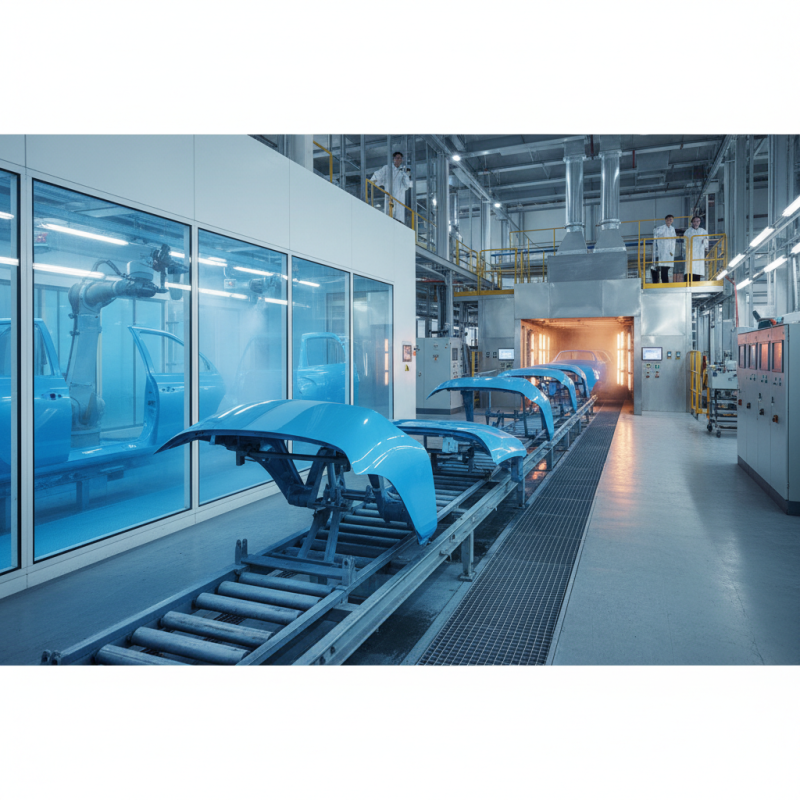
A coating paint line is essential in manufacturing industries. It refers to a series of processes designed to apply protective or decorative coatings to various surfaces. The primary goal is to enhance both aesthetics and durability. Coating paint lines can include stages such as cleaning, priming, painting, and curing. Each of these stages plays a crucial role in ensuring the coating adheres well and provides the desired finish.
The importance of a coating paint line cannot be overstated. It not only improves product appearance but also protects against environmental damage. The right coating can prevent rust, corrosion, and fading. In construction, automobiles, and electronics, a well-applied coat is vital. Yet, achieving a perfect finish can be challenging. Factors like temperature, humidity, and application technique may affect the outcome.
There is also room for improvement within these systems. Some manufacturers may struggle with consistency in coating thickness. Variations can lead to performance issues. Quality control measures are essential to address these challenges. Regular training can help operators master the equipment and techniques. By refining these processes, companies can enhance efficiency and product reliability.
A coating paint line consists of several key components that work together to ensure high-quality finishes. These lines are crucial in various industries, including automotive and manufacturing. The main components include pre-treatment stations, painting booths, and curing ovens. Each part plays a unique role in the coating process.
Pre-treatment stations prepare surfaces for coating. They remove contaminants and provide a suitable base for paint adhesion. This step is vital; skipping it can cause paint to peel or chip later. The painting booths apply the paint and ensure an even distribution. They utilize various spray technologies to minimize waste and enhance efficiency.
Curing ovens set the paint to harden and adhere properly. Temperature and timing are crucial here. Incorrect settings can lead to defects.
Tips: Regular maintenance of each component enhances the durability of the coating line. It's important to monitor equipment performance closely. Keeping surfaces clean can prevent contamination issues.
Coating lines are complex, and flaws may arise. Evaluating each stage can reveal areas for improvement. Training staff on best practices ensures optimal results. Taking time to reflect on processes can lead to better performance overall.
A coating paint line is a sophisticated system used in various manufacturing processes. It applies protective or decorative coatings to products, enhancing their aesthetics and durability. The process involves several stages, each designed to ensure optimal application and finish.
The journey begins with surface preparation. Products are cleaned and pre-treated. This stage is vital; any leftover debris can affect paint adhesion. Following this, the priming phase initiates. A primer is applied to create a base layer that improves the final coat's performance. Observations during this phase often reveal imperfections, prompting adjustments in the preparation process.
Once primed, the products move to the painting station. Here, different methods—such as spray or dip coating—are utilized to apply paint evenly. After painting, the drying stage occurs. UV or heat sources expedite the drying process, but some manufacturers struggle with uniform drying. Finally, a quality control check ensures that standards are met. Any inconsistencies found here can influence future production strategies. Reflecting on feedback is crucial for consistent improvement. This cyclical process places a heavy emphasis on refining techniques and materials for a superior finish.
Coating paint lines play a vital role in various industries, offering improved efficiency in the application of protective and decorative finishes. In the automotive sector, for example, the global automotive coatings market is projected to reach $29 billion by 2027, driven by the demand for durable and high-quality finishes. Automakers extensively rely on advanced coating lines to ensure consistent quality and reduce waste during production. These lines offer quick drying times, which are crucial for maintaining high manufacturing speed.
In the construction industry, coating paint lines are essential for manufacturing materials like roofing and siding. The North American market for exterior coatings is expected to grow at a rate of 4.5% annually. Efficient painting processes help finish large volumes while allowing for intricate designs and color matching. However, the application process can still have limitations. Variations in temperature and humidity can affect paint adhesion and drying times. This aspect requires constant monitoring and adaptation to ensure reliable results.
The furniture manufacturing industry also benefits from these lines. Furniture coatings must not only be aesthetically pleasing but also durable. Reports indicate a growing need for eco-friendly finishes that comply with stringent regulations. Companies face the challenge of balancing environmental concerns with production efficiency. Developing solutions that meet both criteria often involves trial and error, underscoring the complexity inherent in the coating process.
| Industry | Applications | Coating Type | Process Description |
|---|---|---|---|
| Automotive | Exterior and interior finishes | Electrocoating, Powder coating | Parts are coated with a uniform layer to prevent corrosion and enhance appearance. |
| Construction | Protective and decorative surfaces for buildings | Acrylic, Epoxy | Coatings provide durability and aesthetic appeal to structures. |
| Electronics | Circuit boards and components | Conformal coating, Antistatic coating | Protective coatings are applied to enhance the reliability of electronic devices. |
| Furniture | Finishes for wood and metal furniture | Varnish, Lacquer | Coatings provide protection and enhance the look of furniture. |
| Machinery | Equipment and tools | Heat-resistant paint, Anti-corrosive paint | Protective coatings extend the life of machinery and tools. |
Coating paint lines are integral in manufacturing, offering a host of benefits that enhance efficiency and quality. By automating the painting process, manufacturers can significantly reduce labor costs. This system also ensures a consistent application of coatings, which helps maintain uniformity across products. Over time, this can lead to reduced waste and higher output.
Efficiency is another strong point. Coating paint lines can speed up production cycles. They allow for quicker drying times and faster turnaround on orders. This not only meets tight deadlines but can also lead to improved customer satisfaction. However, it’s essential to monitor the system regularly to mitigate issues like paint inconsistencies.
Quality control remains a challenge. While coating paint lines offer advantages, they are not foolproof. Regular maintenance is necessary to prevent equipment malfunction. A lapse in quality checks can lead to defects, impacting the final product's integrity. Therefore, manufacturers need to balance automation with ongoing oversight to ensure the highest standards are met.
: The journey begins with surface preparation. Products are cleaned and pre-treated. This step is vital for paint adhesion.
Pre-treatment removes contaminants. This creates a suitable base for paint adhesion. Skipping it can cause paint defects later.
Products move to the painting booth. Various methods like spray or dip coating ensure even paint application.
Some manufacturers struggle with uniform drying. This can lead to issues in the finished product. Monitoring is crucial here.
Automating the painting process reduces labor costs. It ensures consistent application and higher output over time.
Regular maintenance of equipment is essential. Quality checks help identify defects that can affect the final product's integrity.
While often efficient, issues can arise. Regular monitoring is necessary to mitigate paint inconsistencies and ensure smooth operation.
Evaluating each stage reveals areas for improvement. Training staff on best practices enhances overall performance.
Quality control checks are vital. Any inconsistencies found can influence future production strategies, requiring timely reflections.
Reflecting on feedback from the quality control checks is crucial. This helps refine techniques and materials for better outcomes.
A Coating Paint Line is an essential manufacturing system designed to apply protective or decorative coatings to various surfaces. The primary purpose of this line is to enhance the durability and aesthetic appeal of products across multiple industries. Comprising components such as pre-treatment stations, spray booths, curing ovens, and quality control systems, a Coating Paint Line operates through a systematic process. This includes surface preparation, coating application, and curing, ensuring consistent and high-quality finishes.
The applications of Coating Paint Lines are extensive, ranging from automotive and aerospace to furniture and electronics. By utilizing these lines, manufacturers benefit from improved efficiency, reduced labor costs, and higher product quality. Overall, a Coating Paint Line is a vital asset in modern manufacturing, providing both functional and visual improvements to products.
